 Industrial Solution Finder

Migrating to TSN-enabled Single Pair Ethernet eliminates protocol gateways, elevates bandwidth from 31.25 kbps to 10 Mbps over 1 km runs, and enables deterministic IT/OT convergence.
The Physical Bottleneck of Legacy Fieldbus Architectures
For over three decades, process plants and discrete manufacturing floors have relied on fieldbuses such as PROFIBUS PA, Foundation Fieldbus H1, and Modbus RTU over RS-485 serial networks. While these architectures successfully replaced individual point-to-point analog 4–20 mA current loops, they introduced structural limitations that restrict modern smart manufacturing initiatives. Legacy process fieldbuses operate at fixed transfer rates—most notably 31.25 kbps for Foundation Fieldbus H1 and PROFIBUS PA—which restricts the data payload to basic process variables and primitive status flags2. Field instruments today generate high-density operational data, including vibration spectral analyses, valve transit signatures, internal thermal profiles, and secondary diagnostic telemetry, none of which can pass across a 31.25 kbps shared bus without severely compromising scan cycle intervals.
Furthermore, legacy fieldbus topologies demand dedicated protocol translation gateways to interface edge instrumentation with plant-wide supervisory systems. These translation layers create maintenance overhead, map complex device variables into rigid holding registers, and obscure device-level diagnostics from plant-floor asset management applications. The IEEE 802.3cg-2019 standard, specifically the 10BASE-T1L physical layer specification, fundamentally resolves this architecture bottleneck by supplying 10 Mbps full-duplex communication over a single balanced pair of copper conductors up to a transmission distance of 1,000 meters1. Crucially for brownfield installations, 10BASE-T1L operates across standard shielded twisted-pair cabling—such as Fieldbus Type A cable—eliminating the need to pull new field lines while expanding edge network bandwidth by a factor of roughly 32012.
Time-Sensitive Networking: Delivering Determinism Across Converged Networks
Standard industrial Ethernet protocols have long dominated upper plant levels, yet deploying standard CSMA/CD Ethernet directly to edge sensors and high-speed actuators has historically failed to provide deterministic control guarantees. Unmanaged queuing delays and network collisions prevent hard real-time cycle execution when standard asynchronous traffic mixes with control loops. Time-Sensitive Networking (TSN), standardized through the IEEE 802.1 working group and profiled for industrial automation under the IEC/IEEE 60802 dual-logo standard published in mid-2026, bridges this gap by selecting protocols, procedures, and bridge configurations to enforce strict Quality of Service mechanisms directly at Layer 2 of the OSI model3.
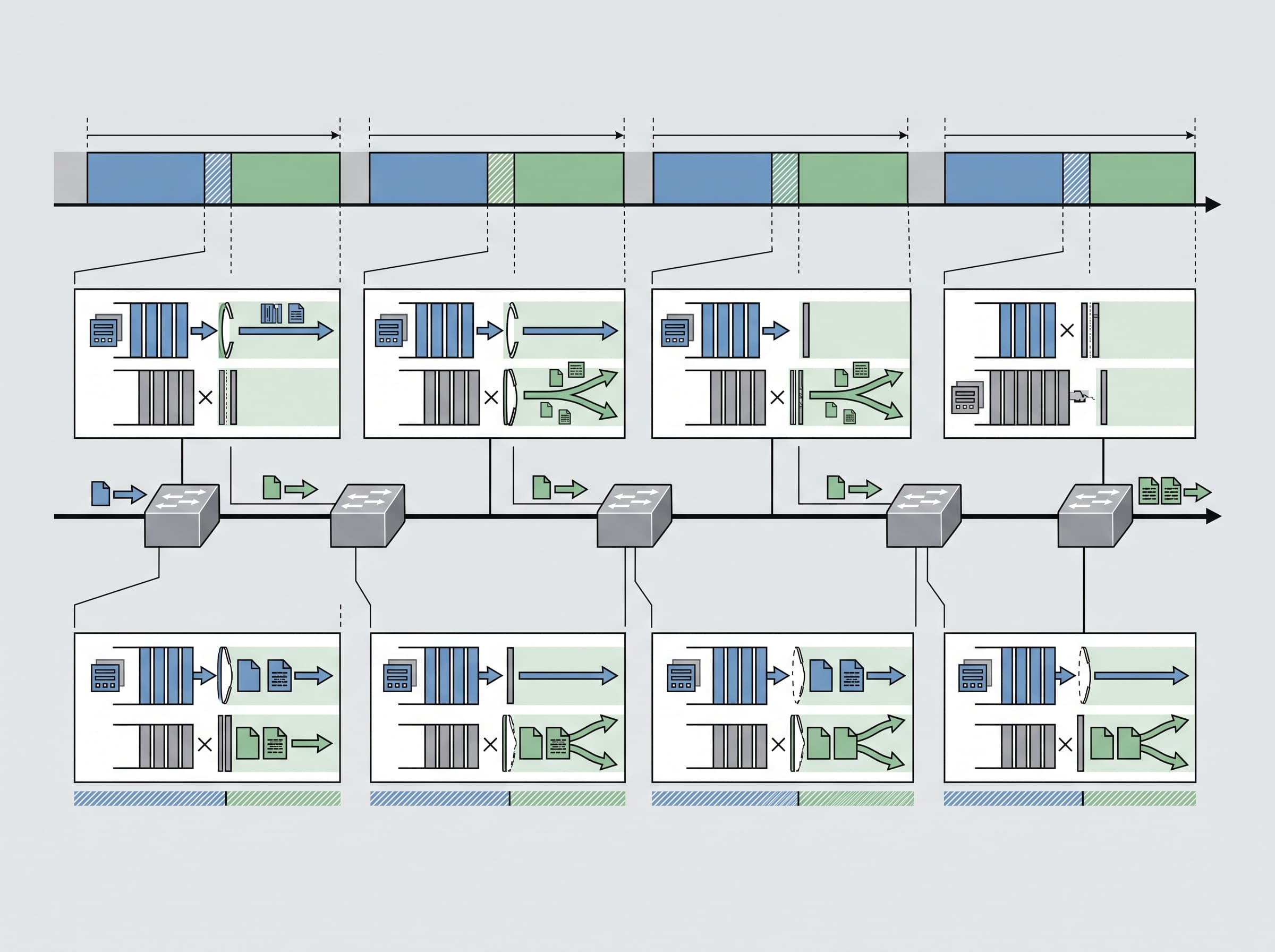
Deterministic performance in TSN is achieved through precise network time synchronization and time-aware scheduling. Under IEEE 802.1AS (generalized Precision Time Protocol, or gPTP), all connected bridges and end stations synchronize their local clocks to a grandmaster reference, maintaining sub-microsecond time alignment across network switches6. Building on this synchronization, IEEE 802.1Qbv introduces time-aware queue-draining procedures, implementing a repeating gate mechanism across switch egress ports based on timing derived from IEEE 802.1AS6. By allocating VLAN tag encoded priority values and opening or closing transmission gates according to dedicated time windows, TSN guarantees latency and delivery variation for scheduled real-time control traffic while simultaneously accommodating credit-based and best-effort background traffic on a single unified network6.
Hazardous Area Compliance and Power Delivery: 2-WISE and PoDL
A primary roadblock preventing conventional four-pair Cat 5e/Cat 6 Ethernet from reaching the field instrument level has been the severe physical constraint of hazardous operating environments. Chemical processing, petrochemical refining, and pharmaceutical manufacturing facilities require strict compliance with explosive atmosphere standards (ATEX/IECEx Zones 0, 1, and 2). Traditional four-pair copper lines carry excessive potential ignition energy and are difficult to seal and terminate in hazardous enclosures. Single Pair Ethernet addresses this through the Ethernet-APL (Advanced Physical Layer) specification, which pairs the 10BASE-T1L physical layer with the IEC TS 60079-47 (2-WISE, 2-Wire Intrinsically Safe Ethernet) standard4.
The 2-WISE concept revolutionizes intrinsically safe engineering by establishing predefined electrical parameter limits for energy sources, field cabling, and energy sinks4. Planners no longer need to calculate cumulative loop inductance and capacitance balances across complex multi-branch circuits to certify intrinsic safety; matching certified 2-WISE source ports to 2-WISE sink instruments automatically validates safety documentation4. Furthermore, 10BASE-T1L transceivers defined in IEEE Std 802.3cg-2019 feature dual transmission amplitude modes: 2.4 V peak-to-peak for general industrial installations up to 1,000 meters, and 1.0 V peak-to-peak, which restricts transmit energy to fulfill intrinsically safe electrical boundaries across spur lengths up to 200 meters14. Crucially, power delivery capabilities diverge strictly depending on the installation zone: across intrinsically safe spur circuits in hazardous areas (Zone 0/1), operating power is rigidly constrained by 2-WISE specifications to prevent ignition—typically between hundreds of milliwatts and 1.84 W depending on the explosion group4—whereas in non-hazardous general industrial runs, Single-pair Power over Ethernet (SPoE Class 15) under IEEE Std 802.3cg Clause 104 can deliver up to 52 W from the power sourcing equipment over the same two-wire cable1.
| Technical Parameter | Legacy Process Fieldbus (PROFIBUS PA / FF H1) | Standard Industrial Ethernet (100BASE-TX) | TSN-Enabled Single Pair Ethernet (10BASE-T1L / APL) |
|---|---|---|---|
| Raw Bandwidth | 31.25 kbps | 100 Mbps | 10 Mbps (Full-Duplex) |
| Maximum Reach per Segment | Up to 1,900 m (topology-dependent) | 100 m | Up to 1,000 m (Trunk) / 200 m (Spur) |
| Conductor Requirement | Single twisted pair (2 wires) | Two or four twisted pairs (4 or 8 wires) | Single twisted pair (2 wires) |
| Power Delivery Method | Bus-powered (limited mA) | PoE (IEEE 802.3af/at/bt, requires 2-4 pairs) | 2-WISE Intrinsically Safe (Spur) / SPoE (up to 52 W, non-Ex) |
| Hazardous Area Approval | FISCO / Entity intrinsic safety calculations | Special explosion-proof enclosures required | Standardized 2-WISE (IEC TS 60079-47) |
| Deterministic Convergence | Proprietary cyclic scheduling only | Requires isolated networks or proprietary protocols | Native IEEE 802.1 TSN / IEC/IEEE 60802 |
Brownfield Retrofit Procedures and Cable Qualification
Migrating a running manufacturing unit from fieldbuses to TSN-enabled SPE does not require wholesale physical re-cabling. Because 10BASE-T1L operates at a symbol transmission rate of 7.5 MBd with a fundamental baseband frequency of 7.5 MHz using three-level pulse amplitude modulation (PAM-3), it is fully compliant with the insertion loss and return loss specifications of existing Fieldbus Type A instrumentation cable1. The migration workflow initiates with a physical layer verification phase. Field engineers use industrial cable analyzers to measure attenuation, characteristic impedance, and shield integrity across pre-installed field runs. Line segments that exhibit minimal mechanical damage or water ingress can be re-terminated with compact SPE connectors or screw terminals without unseating conduits5.
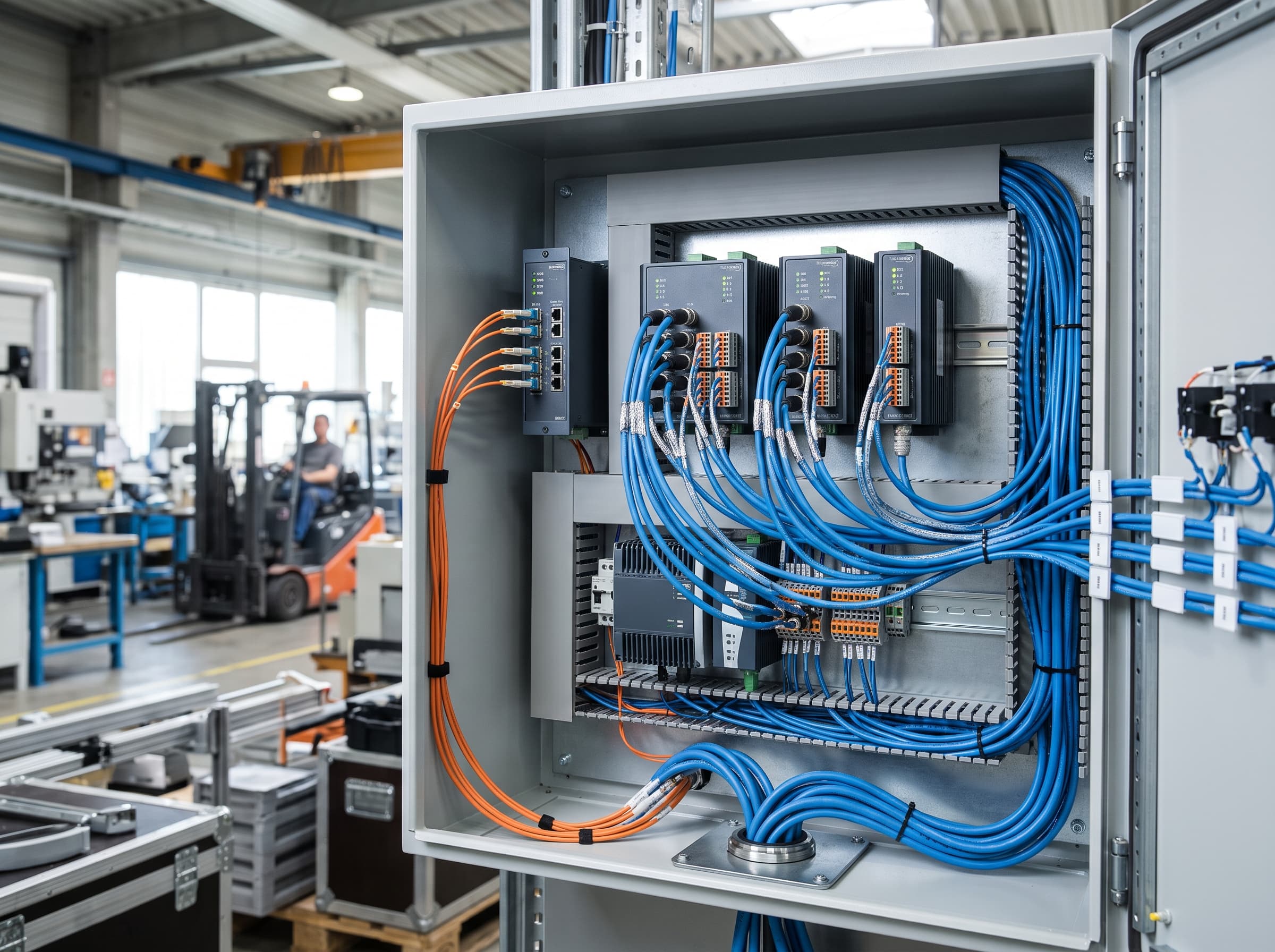
The secondary phase centers on control rack reconfiguration. Media converters or modular APL field switches are placed inside junction boxes or remote field distribution cabinets. These switches serve as bridges, accepting standard 100BASE-TX or 1000BASE-T fiber uplinks from central programmable logic controllers (PLCs) or distributed control systems (DCSs) and distributing 10BASE-T1L single-pair links down to transmitters and positioning valves5. Because SPE natively transmits standard IP packets, engineers can simultaneously run PROFINET over TSN, EtherNet/IP, or native OPC UA down to field sensors without relying on intermediary protocol translation boxes5. This flat network topology allows central maintenance teams to open secure SSH or HTTPS web management sessions directly into edge instruments equipped with embedded web servers from the control room5.
Engineering Boundaries, Conformance Profiles, and Grounding Rules
Despite the clear architectural benefits of TSN-enabled SPE, engineering teams must avoid treating migration as an unmanaged plug-and-play retrofit. The foremost engineering boundary involves conformance class selection and configuration under IEC/IEEE 608023. As defined in IEC/IEEE 60802-2026, the standard establishes profiles that specify features, options, configurations, defaults, protocols, and procedures for bridges, end stations, and LANs to operate converged industrial automation networks3. It additionally specifies YANG modules to represent device capabilities both as digital data sheets and for executing remote procedure calls3. System integrators must verify conformance profiles across selected PLCs, field switches, and transmitters to ensure consistent data modeling and prevent configuration lockouts when deploying centralized network configuration software.
A second operational risk stems from improper grounding and shield termination during cable reuse. While 10BASE-T1L receivers feature polarity independence—meaning reversed wire pairs are automatically detected and corrected without preventing link establishment—high electrical noise environments near heavy variable frequency drives (VFDs) require rigorous grounding architecture to prevent packet loss and CRC errors1. According to the Ethernet-APL Engineering Guideline, while plants equipped with a meshed Common Bonding Network (CBN) typically ground cable shields directly at both ends to maximize high-frequency EMC attenuation, installations subject to potential differences or heavy VFD vagabonding currents must connect one end directly to the bonding network and terminate the opposite shield end via capacitive grounding7. Capacitive coupling blocks damaging low-frequency circulating currents through the shield, though engineers must widen the physical separation distance between motor cables and APL lines to compensate for reduced low-frequency magnetic shielding7. Furthermore, for explosive zone installations, engineers must verify that field transceivers are configured strictly for 1.0 Vpp operation and certified under 2-WISE, adhering to IEC 60079-14 grounding directives147.
Frequently asked questions
Q. Can manufacturing plants reuse existing fieldbus cables when upgrading to Single Pair Ethernet?
A. Yes. The 10BASE-T1L standard was intentionally designed to operate across existing shielded twisted-pair cables, such as Fieldbus Type A wiring used in PROFIBUS PA and Foundation Fieldbus, provided the cable meets standard return loss and attenuation limits.
Q. How does 10BASE-T1L compare to standard 100BASE-TX Ethernet in terms of reach and cabling?
A. Standard 100BASE-TX Ethernet requires two or four twisted pairs (four or eight wires) and is strictly limited to 100 meters. 10BASE-T1L uses a single twisted pair (two wires) and extends data transmission and power up to 1,000 meters.
Q. Why is Time-Sensitive Networking necessary if Single Pair Ethernet already offers 10 Mbps?
A. While 10 Mbps provides 320 times more bandwidth than legacy 31.25 kbps fieldbuses, raw bandwidth alone does not guarantee determinism. TSN standards like IEEE 802.1AS and IEEE 802.1Qbv prevent best-effort diagnostic traffic from delaying hard real-time control packets.
Q. What is the difference between Single Pair Ethernet and Ethernet-APL?
A. Single Pair Ethernet is an umbrella term for IEEE 802.3 single-pair standards. Ethernet-APL specifically combines the 10BASE-T1L physical layer with the IEC TS 60079-47 (2-WISE) standard to provide intrinsically safe Ethernet and loop power for hazardous process environments.
Sources
- 10BASE-T1L Single-Pair Ethernet: Cable Reach and Link PerformanceTimesTech
- The Ethernet-APL Engineering ProcessHochschule Hannover (SerWisS Repository)
- IEC/IEEE 60802 TSN Profile for Industrial Automation | IEEE 802.1IEEE 802.1 Working Group
- A brief look at the Ethernet-APL engineering guidelineHochschule Hannover (SerWisS Repository)
- Single-Pair Ethernet (10BASE-T1L) for Industrial Field Devices: Protocol, Power, and Migration PathPromwad
- Time-Sensitive Networking (TSN) Task GroupIEEE 802.1 Working Group
- Ethernet-APL Engineering GuidelineEthernet-APL Organization